Upcoming Events
2025 Officers!
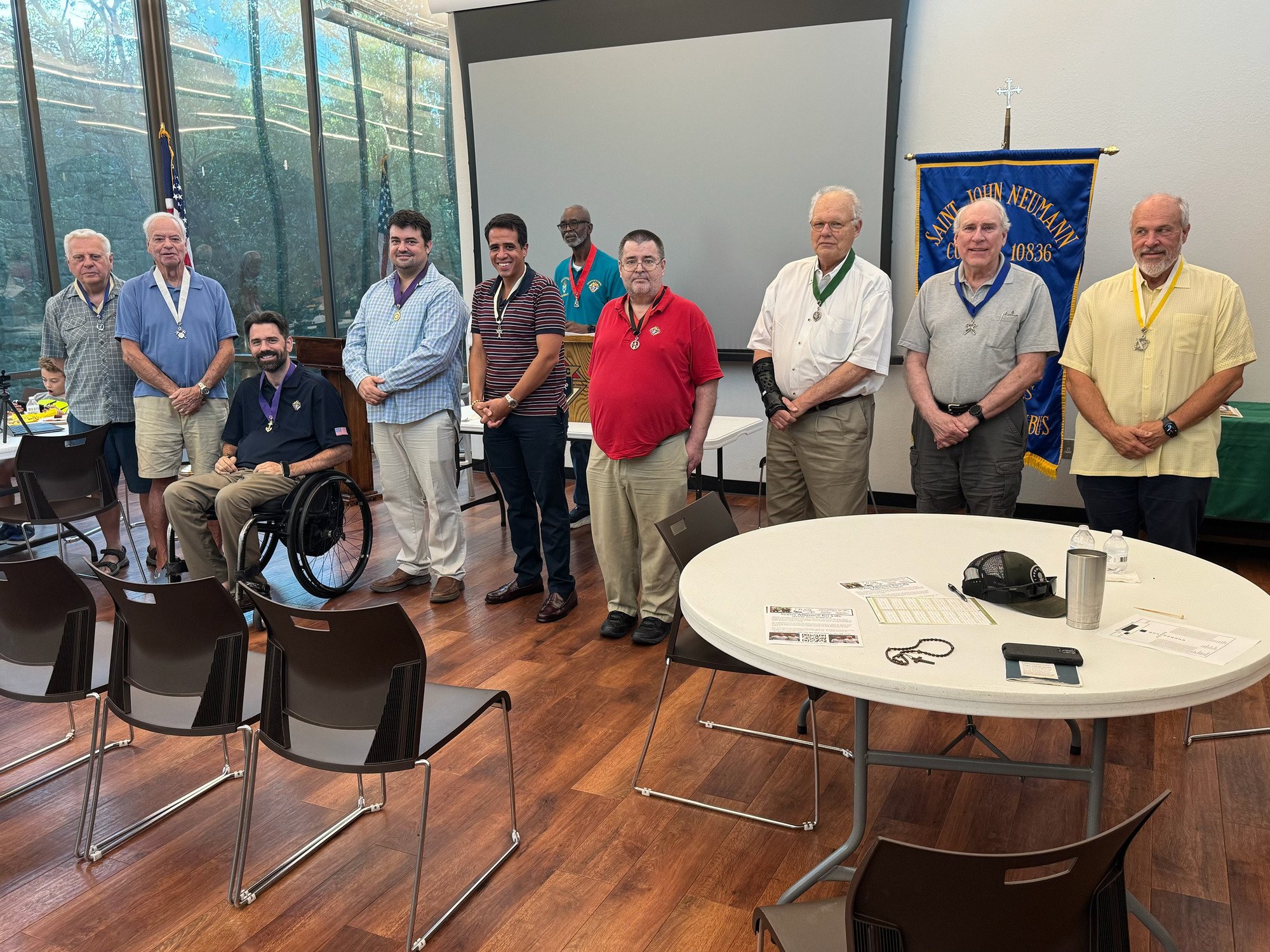
We joyfully congratulate Joshua Wilhelm on his recent installation as Grand Knight of the St. John Neumann Knights of Columbus Council.
Joshua is a dedicated parishioner at St. John Neumann Catholic Church. He serves as the lead minister of Alpha, regularly participates in Eucharistic Adoration, and brings a spirit of humility and faith to all he does, particularly through his devotion to praying the Litany of Humility. Outside the parish, Joshua works as a salesman and is passionate about sharing his faith through service and witness.
Please join us in praying for Joshua and the full slate of 2025 newly installed Knights of Columbus officers:
- Grand Knight: Joshua Wilhelm
- Deputy Grand Knight: Trevor DeMartini
- Chancellor: George Ramon
- Inside Guard: Dylan Lozano
- Outside Guard: Jay Sheehan
- Treasurer: Robert Donathan
- Warden: Dwight Brown
- Lecturer: Rick Ebert
- 1 Year Trustee: José Bazán
- 2 Year Trustee: Martin Ochs
- 3 Year Trustee: Charles Porter
Featured Causes
We support these charities financially and through service.

St. Vincent DePaul Society
Material support to the poor

St. John Neumann Parish
New Parishioner Dinners, Youth Activities, Social Outreach, and Retreat Dinners

Local Youth Education
Scholarships and Grants

Disaster Relief
Past disasters include: Hurricane Harvey, Bastrop Fires, and Wimberly Floods

Pro Life Causes
Walk for Life, Abortion Clinic Prayer Services, Texas Alliance for Life March & Rally

Diocesan Vocations
Personnel and Seminarian Support
Major Fundraisers


Charity Golf Tournament

Lenten Fish Fries

Cooked Food Sales

Fall Pumpkin and Pecan Sales
Service
You will find our members volunteering in a variety of ways.
- Blood Drive Events
- Faith Based Education Support
- Habitat for Humanity
- Parish Picnics
- Greeters
- Easter Egg Hunt
- Scouts and Youth
- Ushers


